Tuesday, February 13, 2007

A weekend in the Argolid - part 2

So here we go with the description of the second day of the weekend in the Argolid, during which we set off to look for the Triassic fossil beds of Epidaurus on the old route from Mycenae to the coast.

We set off on the road out of Nafplio a little after breakfast ceased being served at the Marianna Rooms under the castle and after a short drive around the fortifications of the "Its Kale", or more altaicly Uç Kale we set off east for the Epidaurus area.

A quick word on the Uç Kale whatsit - the words mean three forts or three castles in Turkish and are a reference to the triple fortifications of the hill above Nafpio on which the Xenia and Nafplia Palace now stand.

The video below opens with a view from the hotel, shows some of the Its Kale fortifications including the winged lions which the venetians saw fit to carve into flat surfaces everywhere. It's a little jerky in places, but you get the idea.


The plan was to go out towards Ligourio, have a look around in the Natural History Museum in the town and then to go fossil hunting for ourselves in the area before the theater. If there was time, we would look for the old medieval church which is covered in classical spolia which is meant to be in Ligourio.

On the way, with K driving, we passed a MiniCult sign, in the standard 1:5 side ratio and the brown cultural sign colour. Mycenaean bridges, it said. This was quite a few km from the Mycenaean bridge I know about on the route, although I have often read about there being more thna one bridge no the way to Epidaurus. Well, we did what every self-respecting bronze-age loving sort of guy does and we stopped the car and set off along the foot path for the bridges marked by the signpost.

After a brief walk of about 300m on a footpath worn away in places by recent strong rains we reached a signpost indicating that there are two bridges, one very close, the other an unknown distance away down a continuation of the good footpath. I would not suggest doing the walk between the two bridges during normal daytime hours in the summer, leave it for late afternoon or early morning. I would love to walk the whole route some day linking Epidaurus on the coast to Mycenae via Midea.
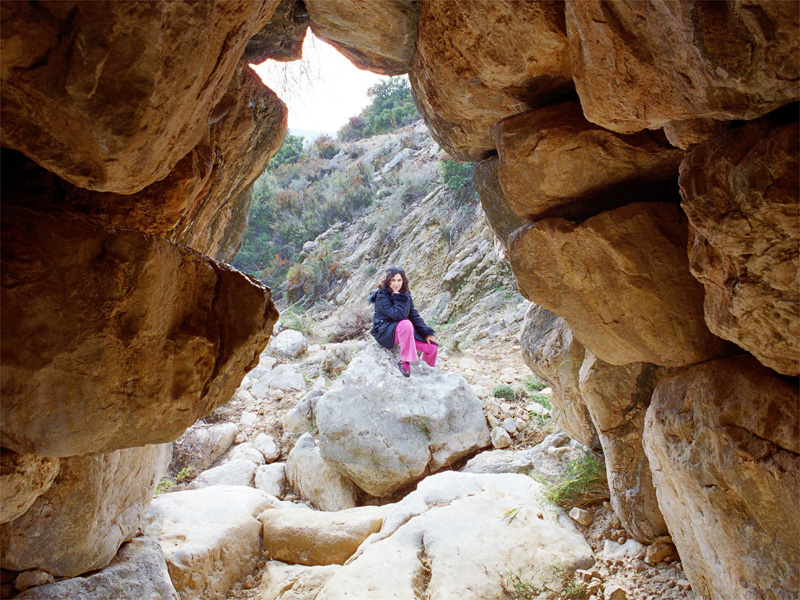
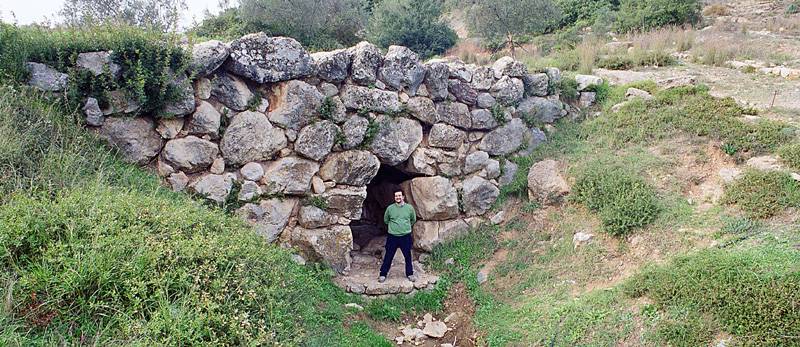
Korinna at the Mycenaean Bridge
Here is K with the bridge's corbelled arch framing her. Corbelling is a vaulting technique whereby a space can be vaulted not by making use of the arch (first discovered and widely implemented in the Hellenistic times) but by positioning each successive block in such a way that although it overhangs the previous, the forces produced do not cause instability as they are sent downwards to the base of the structure. Something like the cantilever effect, I am told. The system was used extensively for the so-called galleries at Tiryns and, of course, in the construtcion of tholos / beehive tombs.
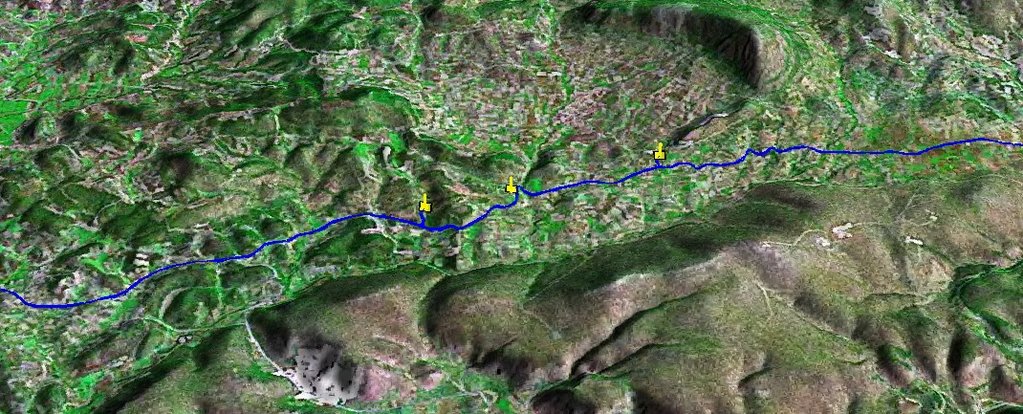
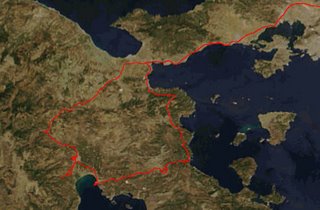
Three waypoints - three bridgesThe Three yellow squares represent the three bridges visited.

The photo in the trailer post was taken in front of the well known and very photographed mycenaean bridge at Kazarma. I have photos of myself with this bridge from maybe even ten years ago, maybe more. We found the other end of the nice new footpath here, confirming that the second bridge referred to at the first was the one at Kazarma.

I hope some day to be able to get organised enough to put up a photo from every one of my visits to the bridge.

Next up, and really rather happy with our successes in seeing new things in an old neighbourhood, we took a left turning to go find the third of the three bridges which are currently signposted. The signposts lead you up a narrow road which stops abruptly next to a local resident's house. Fortunately this local resident keeps her yard gate open, otherwise there would be no space to do the 3 point turn required if one is to avoid reversing back to the main road. The bridge is close enough to the main road to walk easily rather than to go through the whole three point turn and reversing thing.

Third bridge messyThe rubbish around the third bridge we visited.

We were rather disappointed with K to finally reach the final bridge. The recent heavy rains had brought a whole lot of crap down the hill and what we ended up seeing was less an archaeological site than a tip - complete with what seems to be the mandatory child's bicycle. I am not sure whether this is visible in the photo, but it should be clear in the video.


The video opens with the walk from the car to the first bridge, some looks at the first bridge, the road on the way to the Kazarma bridge, some walking around and into the bridge of Kazarma, complete with some close-up views of the masonry and some little numbered dots that the archaeologists have put on the bridge. From there, we have a drive-by shot of the Kazarma Tholos Tomb - pretty much contemporary with the bridges, or possibly slightly earlier (to judge by the size of the blocks in the masonry). We then have the drive up to the local lady's house and the walk to the third bridge. I know I could have made the editing tighter, but when one is rushed, and has no real natural flair, one sacrifices quality for time - that's what I say to myself to allow me to sleep at night.

Putting the bridges firmly behind us and a little disappointed by the third bridge, we continued on to Ligourio. I had mixed feelings about the Natural History of Ligourio ever since I heard about its opening and especially given the quality of other road-side private museums I have visited.

Natural History Museum of Ligourio
Collection of shells spelling out the museum's name

Entering, I was pleased to see the number of posters on geologic or ecologic themes, many of which were obviously brought from abroad and translated specifically for the museum. The museum is laid out on one floor, in a number of rooms with most emphasis being placed on marine fossils from the Paleozoic and Mesozoic periods, although some more recent finds from the Pikermi bone beds and from the Rafina area were also present. There was obvious emphasis placed not only on the local fossils (from the Epidaurus area) but also on Moroccan fossils which had been purchased specially for the museum.

The lady told me that photography was allowed and here is a selection of my favourite shots from in the museum:

Crinoids
Crinoids - these frond shaped critters are animals which anchor themselves to the sea floor and filter nutrients and plankton and stuff out of the seawater in order to eat.
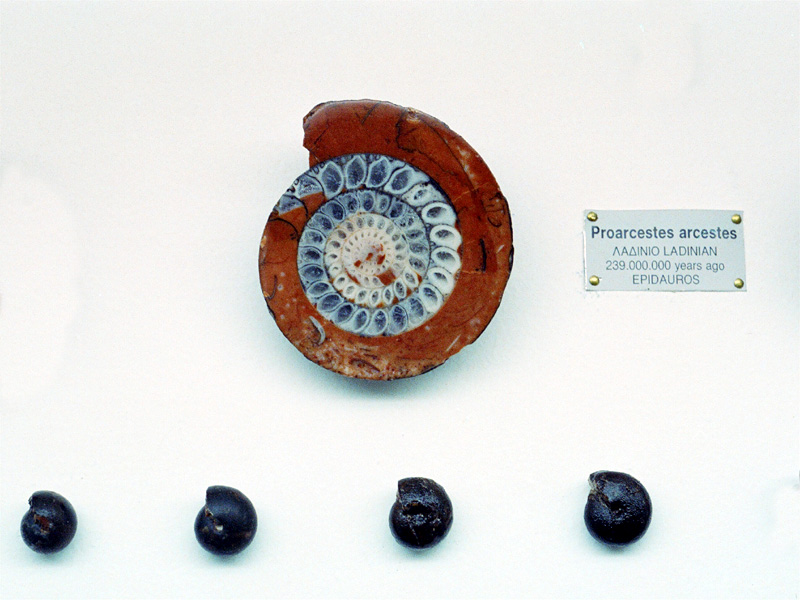


An Epidaurian ammonite sawn in half and polished to display the internal structures preserved.


Death assemblages of ammonites, again from the Epidaurus region
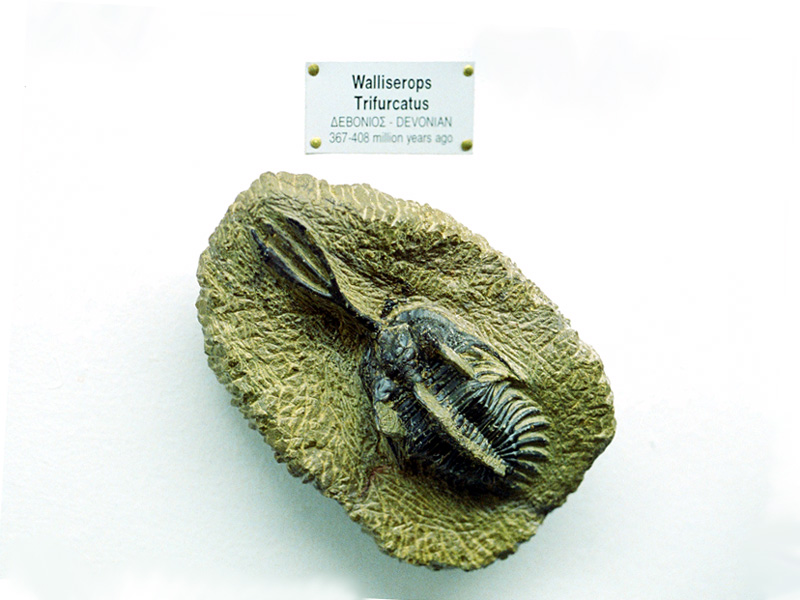


A trident-faced trilobite of the Walliserops Trifurcatus species.


The video shows a walk-around of the main parts of the museum. One take, a little rushed.


I bought my very first trilobite from the museum shop for the sum of 10 Euro - not a bad deal I think although I have no idea how much trilobites cost elsewhere.

We had managed to gather no information about the whereabouts of the Epidaurus fossil beds, but we had a pretty good idea of what we were looking for - essentially black round things sticking out of the pinky-red matrix.

We set off from the museum and following a lead found on the net, we circled the nearby hill which we supposed must be the location of the fossil beds. We found nothing. I am not used to not finding what I am looking for, so we went round and round this hill, and we walked into it off the dirt track, but generally had no joy.

I need to have a look at a geological map of the area, slap it onto the computer, then onto the GPS and go back.
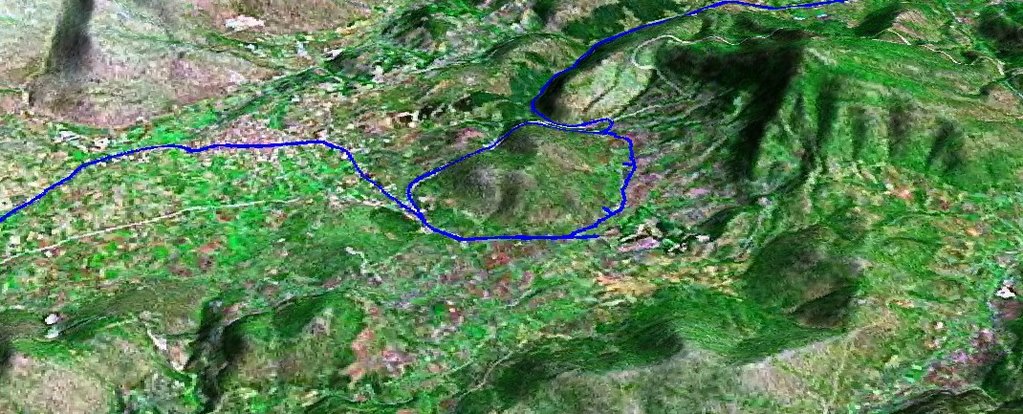


The hill we circled may not be the right place to look - but it had a dirt-road so we looked there.

From there we went to Epidaurus on the coast and back to Athens.

Tuesday, January 23, 2007

A weekend in the Argolid - part 1

So let me tell you a little bit more about the weekend in the Argolid. The Argolid is close enough to Athens to be the sort of place one thinks of visiting and far enough away for it to be the sort of place one thinks of visiting.


Our last trip out to the Peloponnese of the exploratory sort was on Palm Sunday 2006, and we climbed Acrocorinth and visited Corinth proper and then went to the cemetery at Aidonia and generally we had a totally diachronic time looking at remains of the three great civilizations which have made Greece characteristically theirs. Hell, it's not me blowing this hot air out of my hat, it's Toynbee himself, who in writing "The Greeks and their Heritages" about the Mycenaean era, the Classical era and the Byzantine era basically said a lot of stuff that struck a chord with me.

So we saw in one day, the Mycenaean cemetery at Aidonia, the Classical civic centre of old Corinth and the fortified Byzantine settlement of Acrocorinth, and then we found time for Frankish gothic architecture and weird mountain lakes before we went on to dodge about dirt roads at altitudes where the snow had not yet melted, but this is all another story.

This time we spread the history and culture with its tripartite nature over the whole of the weekend, and probably skimped a bit on the Classical, though not a lot.

As usual, we left Athens very late and stopped at almost every opportunity for snacks while managing to arrive at our medieval site with only about an hour until sunset. We had spent some time at one of the classical stops on our weekend, so I guess this is not totally unjustified.

My suggested route to the sites requires the driver to take a right immediately after crossing the Inakhos on the way into Argos.

The fortified hill of Deiras sits slightly before the fortified hill of Argos proper, known since antiquity as Larissa - a reference to the seagulls which no doubt frequented the spot. We walked around the sanctuaries of Athena and Apollo, slightly underwhelmed by what we were looking at, in the same way that a visitor to Sparta may be disappointed.

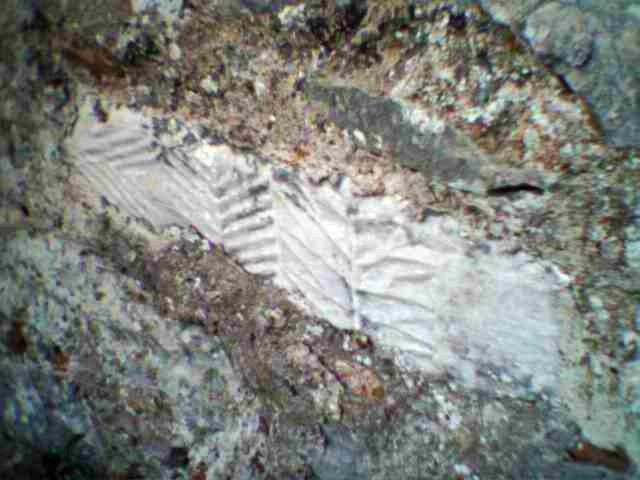
Layers at Deiras

Still there was opportunity to do a bit of archaeo-sleuthing and mental reconstruction and all the other mindgames which offer themselves at sites having more than one building phases or periods of usage. We then drove the circuit of the Aspis hill, stopping at some of the polygonal masonry bastions and remarking at the large number of used prophylactics littering the one lane, but asphalted ring road, before setting off up the windy road to the summit of the hill.


Polygonal masonry on Aspis Hill

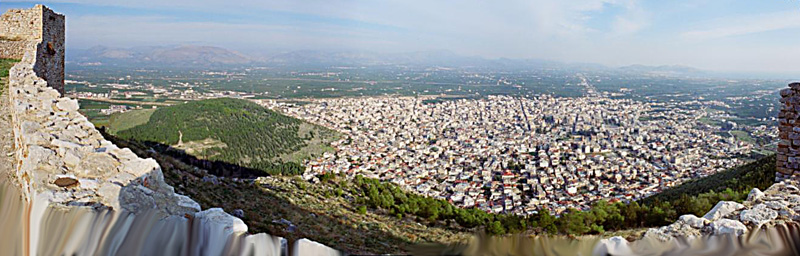
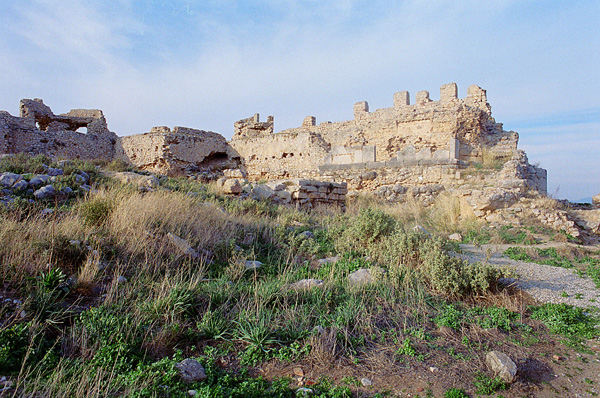
The asphalt road takes the visitor right up to what must be the old main entrance, facing sort of south and a little west and commanding a view over the modern town of Argos right through to Palamidi to the south, and beyond. The books mention that three different building phases are clearly visible and we were determined to tell them all apart, although we were upset that there would be no Mycenaean fortification to look at in addition to all the others.


The view to Nafplio

We took in the view, which stretches easily out to the Palamidi to the south and on down the curving coast towards the lowlands of Arcadian Parnon and then entered the castle by what looks like it ought to be the main entrance after a small diversion playing with plants. Not any old plants - but some plant the name of which I must look up in a proper book because google is not returning anything useful. They have a bulbous head about 7-15 cm above the ground hiding the seeds. If you touch it ever so slightly, it will burst, showering the area with seeds. Very good fun for city kids like yours truly and K.


We took what seemed to be the most logical route around the castle - anticlockwise at ground level then walking back to enter the "keep" and after thoroughly exploring the keep, exiting from the ramp to the south.


Spolion in Northernmost bastion

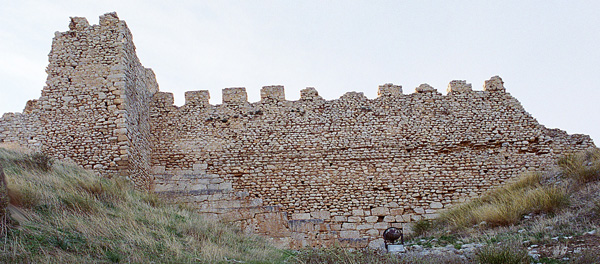
There was a nice spolion in the northernmost bastion which I recorded on the video. Spolia are pieces of older masonry re-used as building blocks with no regard for their original purpose or position - all that is of interest is that it is a sometimes ready squared piece of building block. It is often the case that spolia incorporate carved members and inscriptions. It is on the walls of the citadel / keep that the many different periods of construction are visible - in this stretch of wall there are clearly visible ashlar, polygonal and medieval masonry courses.

To the left of the stretch of wall in the image is an improper entrance into the citadel which has some spray paint graffiti creating a rather bad image for the visitor. Talking of bad images for the visitor, the flag is in a very badly ripped state.

Entering the citadel from here (flagpole to your back and graffiti to your right), there is a walk around circuit which takes you to the opposite side and back to the car, while the rest of the citadel stretches out to your right. Do not go straight for the exit as you will miss most of the fun of having come up here.

Graffiti near the flagpole

Its is probably best to walk a little around towards the exit before turning round to face the entrance you have come in from. The upright wall with the window at the spot where you entered should now make sense architecturally. Maybe it won't, but for me it did. The window is the window in the apse of a medieval church, which runs parallel with the wall (with the ashlar and polygonal masonry described above) on the other side of it. The church is set at a level slightly higher than ground level and I am not sure from where access would have been originally. The church has a very simple plan (one aisle basilica with apse) and it was impossible for me to tell whether it was built by the defenders or the subsequent conquerors.

Looking back towards the church with cisterns in left foreground

We are currently standing about two thirds of the way to the other exit, OK - we did not go clamber about the church because I wrote that you should just look over your shoulder at it not go and clamber about. If you have clambered about, you may want to go back to where you were before going to clamber. It is not my fault you won't follow instructions.

With your back to the church, turn right and being careful of the cisterns, walk to the north encircling wall with the walkway that leads to the church again. Hang on - that means the church is set up N-S rather than E-W. The cisterns are fairly interesting in and of themselves. It is so easy to forget how important a reliable and clean supply of water is, no?

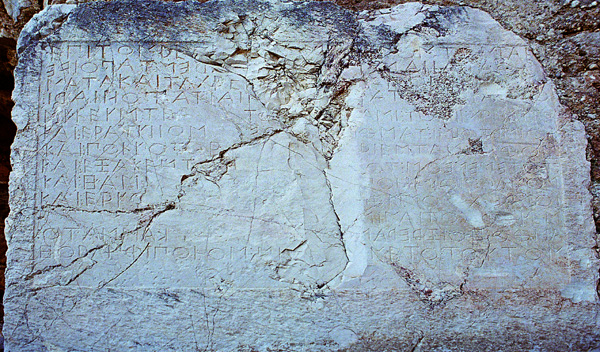
So we are now standing in the corner of the citadel, the church to our right in the distance and the cisterns behind us. We are facing northish and the walkway which goes right to the church is in front of us. There is a nice spolion column to our right, but the highlight of my visit to the citadel was this funky spolion incorporating an original archaic inscription. Absolutely mind blowing. The text does a bit of boustrophedon and has very archaic looking letters to my non specialist eye. It begins EPI TONDE and the top right corner is lost to canon or something. It incorporates the Ksi, Phi and Theta letters but as far as I can see no other late letters. I can't tell what it is about, although there is a few lines of text all beginning with KAI. There seem to be digammas in the script too and the deltas are rounded like roman Ds. I had a go at putting stuff into google but did not have as much success as the slab in the Bulgarian bar.

Archaic inscription slab

We left the citadel and came down into Argos joining the so-called ring road which takes you round the town on one way streets rather than through the central vegetable market when you are trying to get through Argos. You normally join this road by taking the right immediately before the very popular and rather good Pantazis fast food place. We went under the theatre etc. and headed out to Hellenikon to show K the pyramid and hopefully have all sorts of discussions about the loons who believe it to be older than it really is.

Here K outside the Castle of Larissa

We did not have the discussion which is a pity on the one hand as I was looking for K to confirm that what the consensus says is right, on the other hand, it was good. Why good? Well, we could not talk about it because K was totally unfamiliar with what it is the kooks say about the "pyramid". We just agreed that, yes it is pyramid shaped and left it at that.


K in front of the "pyramid" of Hellenikon


We spent the night at the rather nice Pension Marianna in Nafplio, which is on the castle and just underneath the Xenia hotel. Brilliant view and the rooms were not so bad as well.


K on top of the "pyramid" of Hellenikon - in a pose not unlike that of the French dwarf soldier from the 19th Century


Next time day 2 of the trip to the Argolid.

Wednesday, January 17, 2007

No luck today, hazy sky

The title says a lot really. I went out twice, once with my slightly polarizing dark glasses, but there is really too much haze in the sky to be able to say that I saw anything. I have my 300mm lens in the car with my camera, ready for tomorrow's attempt. I am thinking though, that my 135mm lend with the polariser should blacken the sky enough, but will the 2.5 stop light reduction be so much as to lose the comet itself? I am thinking of shooting at 1/1000 sec at f8 (on 200ASA film), so use of the polariser will mean I have to open up to f4 or more. At least I know where to set the focus distance...

I will try to keep you informed.

Tuesday, January 16, 2007

Comet McNaught in daylight

I missed the comet McNaught C2006/P1 in its evening apparition due to bad weather and bad organisation. I now read that it is visible in daylight, and instructions have been posted at astroprof. I went out today to give it a shot, but had no luck. I will come back tomorrow with the long lens and the binos - binos to check where it is, etc. and then the long lens to try to take some photos in daylight.

There was too large a humidity halo around the sun, today. I will try again later in the week and will keep you posted.

Monday, January 08, 2007

Mycenaean bridge

My favourite Mycenaean Bridge lies on a rather steep curve on the road between Nafplio and Lygourio. Imagine my surprise in December when we saw another two bridges signposted and heard tell of a third somewhere. Once upon a time I would chase these things all over the country. Then came the MiniCult and it started putting the brown signposts everywhere. This is not so bad in and of itself as it tends to draw one's attention to sites which may have otherwise been overlooked. It does however detract from the joy of the hunt.


The bridge in the photo is my fave because it is the first I consciously spotted. I have many photos of it over the years and may dig them up for you some time. Built at least 3200 years ago on a corbelled design (not vaulted, but corbelled) the bridge is still a monument to a time when public works in Greece were built to last.

The photo is from December 2006 from a groovy road trip K and I made:


Hopefully I will have a chance to write all about it soon. There is a small video over at You Tube: Larissa Castle at 5telios at YouTube. The video shows K exploring Larissa Castle and has some good shots of the different masonry styles and some spolia in two different locations.

A fair number of photos from the weekend, which I just got today exist, and I'll have to include them when the time comes to write about it.

Friday, December 22, 2006

"Darnce"

So we went to that performance choreographed by the guy who did the choreography for Athens 2004. Athens 2004 opening and closing were not bad at all. Papaioannou is his name. Apparently he is well known. I don't know the first thing about darnce.

The performance we went to was called "2" and featured an all male cast. It explores men, manliness, masculinity etc.

I am no critic, just someone who went to the performance, to a certain extent against his will, but with a healthy dose of curiosity and with a sense of obligation, so as to ensure that I too would be able to throw my 2 cents into the ring whenever the conversation would turn to the performance.

The stage was minimalist to the extreme. It was empty. All necessary partitions and stage props were carried in and out to great effect by the dancers themselves. There would often be two or three (once or twice even more) poles of interest on the stage at the same time, which worked well enough, although the occasional full cast tableaux were less effective.

Plot-wise, I did not find myself wondering "what the fuck is going on now?" more than two or three times during the show and I must admit that the emphasis on masturbation which was depicted in various ways at various times in the show was a little disconcerting.

There was a small moment of joy when I recognized a reference to the Aristophanes story from the Symposium of Plato. Unfortunately no one else seemed to notice and I had to quietly smile and nod alone as the two dancers stuck back to back became unstuck (with suitably schlocky sound effects) and began their journey as two halves longing to be re-joined. The scene was repeated towards the end of the show.

Some scenes dragged, others were fun enough. In all, though, I would not rate it too highly. Everyone is ranting and raving, but I get the feeling that this is more because one feels compelled to rant and rave about it lest one be considered boorish and unknowing. Yes, some scenes were good and memorable, others were how I would imagine Greek darnce to be, extrapolating from what I have seen of theatre in Greece. At best, the vast majority of theatre in Greece today may described as provincial and lacking in subtlty and finesse. Certain scenes in "2" seemed to have been dumbed down or exaggerated as if the artist was creating for an audience which lacks the ability to appreciate real art, rather than creating for his own gratification.

It was worth having gone, though, if only to be able to have an opinion.

Thursday, December 21, 2006

Team


So here is the team I work with - from the right, my boss, with my arm around her, and in the middle in the white trousers is "Igor", my sister.

Yes, I work on a team with 9 girls.

Thursday, December 14, 2006

Like the word paleomammalogist

You have to get to the end of the article to find the word, but it is here: "Paleomammalogist"

Cool little story about the oldest known mammals to take to the skies, and a new order of mammals to boot!

Thought I would share.

Thursday, December 07, 2006

It's here.

I am currently listening to an album I have recently purchased from Amazon.com. It's in one of those nice hardened CD cases with the button you have to press to open and with suitably tasteless cover art. I am currently listening to the first track which is catchy enough to get used to, but I will reserve judgement on the rest until I have heard the whole thing through a few times.

The monster is loose indeed!

Tuesday, November 07, 2006

Saddam verdict

Over at Struggling Author Marie has written a few words about the whaddayacallit verdict thing and, basically, I agree with her 100%.

So there.

Monday, October 30, 2006

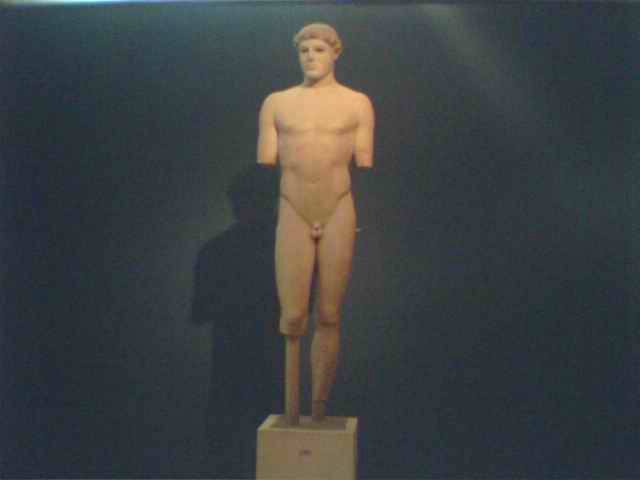
Kritios boy disappoints tourist...

The Kritios boy stands to the right of the Blond boy in the Acropolis museum, they form the back end of the kouros exhibit in the museum and represent the very latest kouros forms before the sacking of the citadel of Athens in 480BC. I had the pleasure of seeing the two of them again yesterday, along with old favourites such as the moschophoros and the sandal-binder, together with James and Fiona and Korinna. So there we were, kettle drums going off in our mind's ear and quite excited as we were about to see the Krition boy again (of course, I underexposed the whole roll of film, but that's a story for later), when a voice was heard coming from a group of North Americans huddled around the statue: "Oh, that is such a disappointment".

We truly are living in strange times if one can be disappointed with their first sight of the Kritios boy.

Monday, October 23, 2006

"Endangered"

"Workers in Iceland hose down an endangered fin whale"

Err, yeah, like, it's sitting on a bloody platform out of the water - I'd say it's endangered...

Anyway, as one who has eaten whalemeat (and come to think of, the flesh of quite a number of endangered critters), I can honestly say that:
1) I am sure that the people of iceland know what they are doing, and
2) I can't see what all the fuss is about.

After all, whale tastes better than seal.

Wednesday, October 18, 2006

Possibly getting older

The odd grey hair in amongst the mane of hair on my head, I have sorta lived with that after discovering the first one in a scanned photo of myself proudly standing in front of a fiat cinquecento much less battered than the one I currently abuse. I had thought that the hair was an artifact of the scanning process, but no, it was there in the mirror as well… This was back in 1998. Then came the grey hairs in the beard, which I have been watching as they multiply (while the grey hairs on my head have not managed to do so) since I noticed my first one a couple of years ago. Now, the final bastion has fallen: white hairs in my 'tache. Not only that, but someone at work noticed it only like a day after I had noticed the little fucker. I have no idea what to think about it – like whassisname says in Spinal Tap – I would be, I would be upset, if I were not so heavily sedated. I am not sedated, but I am well too tired and ragged at the edges to sit and worry about the graying of my beard. It was fun laughing at the ginger hairs in there, and I am sure it will be fun to laugh one day at the whiteys, but not yet, dammit.

Well for what it’s worth: Fucksocks!

Thursday, October 05, 2006

With a radio and good batteries…

As her bjorkiness so eloquently puts it: I wish I was on a mountain-top…

I wish I were here, actually:


I am going through one of these phases, where the sweat is sticking the shirt to your back and however high you set the airconditioning fan, it is never high enough. No really, this was not intended to be a metaphor and did not start life as such, but now I have read through it again, all I can think about is how well it works metaphorically too.

Bogged down by gunk in almost all aspects of my life at the moment, it is tough to get myself moving to de-gunkify the situation. The crazy inertia of it all. Stuff that should have been done that was not done lying around me wherever I go, at jbex, at home at the club. Inertia chaos.

Did I write about my ear? I don't think I did. On Tuesday about two hours after landing, I heard this high pitched beepy noise and a pop. And that was that. My hearing has been totally bollox in my left ear since then. I can’t follow a conversation in a crowded room, there is buzzy hissing noise twenty-four seven and generally I don't like the way it feels. I am seeing the doctor about it tomorrow.

Some day I'll be writing about the photos… although they were taken before the blog came into being.

Tuesday, October 03, 2006

jbex

I rarely write about jbex. Once in a while an indirect reference creeps in from time to time, some travel or whatever. Things are tough, bordering on the surreal, bordering on faulty towers. At the moment I feel strong enough. Hell, I am even looking forward to the challenge a little (must be the winter coming in).

There must be a bunch of bad karma being paid off here.

Tuesday, September 26, 2006

Crickey!

The link in the title is to a page on the BBC website gathering views on immigration following the EU's agreement to let Romania and Bulgaria accede. The accession of these countries will be a good thing, but the reaction of the BCC's readers is a little extreme if you ask me.

What has happened to the UK I knew? When I left eleven years ago I would never have imagined such a reaction to the question.

Is this violent intolerance of foreigners what Tony the Pony's lasting legacy will be? To be honest I am shocked. I am also glad that I have not had the opportunity to visit for four years.

It is sickening to see such ill informed and misguided bare faced racism being bounced about through the official mouthpiece of the Britsh government - the BBC. And did anyone else notice that the pictured bulgarians in the main article are not quite the most representative looking Bulgarians.

I respectfully ask Britain to stop whingeing like spoilt children being told to share their sweets with the other children and make a decision as to whether you want to be in the Union or not. I dare say you would all prefer to have pounds shillings and pence again.

I am totally surprised and appalled.

Friday, September 22, 2006

Palpable excitement

The 9th annual Panhellenic Speleological Convention is being held starting this afternoon down in Monemvasia. My car is buggered. It keeps going crazy and overheating for no perceivable reason. The drive down will be interesting to say the least...

More news on my return.

Wednesday, August 02, 2006

Hitch-hiking to India from the Balkans

Gordan is a friend I met in southern Macedonia in 2003. We climbed the castle of Kralye Marko together on top of the granite hills of Prilep. At the time I felt a little bad at dragging him up there, not sure if he really wanted to have a look at the castle, or if he was coming along because he was working with me and I was in his country.

I later learned that Gordan is probably more adventurous than I am, as he set off a week after our work together for China, with no intention of paying for transport - just hitch-hiking...

This year he is going one better and he's set off hitchhiking to India and blogging on the way. So it is with great pleasure that I present his bilingual Macedonian / English blog, with photos: Backpacking is a Freedom

Good luck Gordan!

Tuesday, July 25, 2006

Return from Istanbul Video

This is the way we come back home, come back home, come back home; this is the way we come back home la da da da dee dee dee do.

Friday, July 21, 2006

Dead characters - spoilers!

K - don't read this I write about stuff that happens in the Half Blood Prince...

Yeah, so I am probably the only guy in the world currently recovering from the double whammy of losing Dumbledore and Boone all in the same week.

Dumbledore left us this week because I'm buggered if I am going to pay Ms. Rowling's price for a hardback and the paperback has only just come out, and he was quickly followed by Boone, because we have only just got to that bit of the first season, and only because they have been playing one episode every night for about ten days.

So living in the back of beyond... it sort of means I get hit with the emotions later than the rest of the world, despite globalisation's best efforts to make us all eat drink and shit at the same time and in the same way.

Thursday, July 13, 2006

Slight editing in Ravenna II

I have only just noticed how crap and unpolished the text for Ravenna II was. It remains crap and unpolished,. of course, but slightly less so...

Peppers to plant to pepper again

Time to look into what's happening in the garden now:

The story so far can be found out on the following pages:

Green fingers
Peppers...
We have Pollen!
Peppers swelling


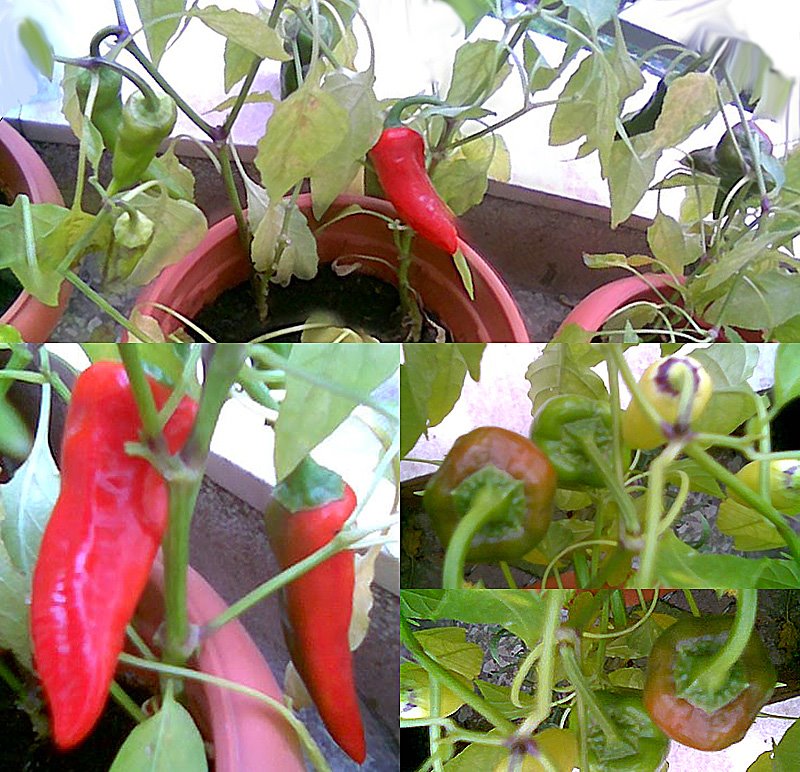
At some point in April the plant pots were all taken outside onto the balcony again. The weather had cleared and nighttime temperatures were now consistently above 10 degrees Centigrade. It was just as well we had brought them in for the winter as all those put into plant pots not inside died horribly. The pictures show the situation at 21 April 2006.


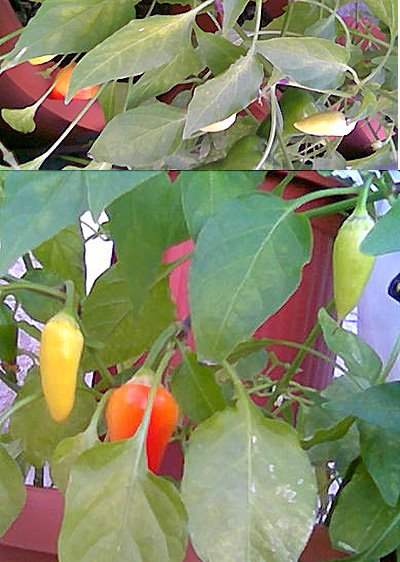
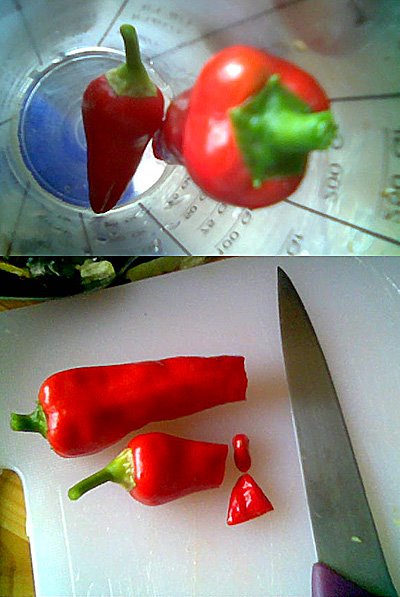
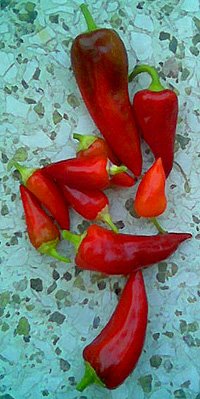
By 27 April, some of the peppers had begun to redden as seen in these two pictures. We had what must be two different varieties growing on the balcony - one producing fairly regular conical fruit, the other producing more elongated and irregular, sometimes curved or cornuform. This picture depicts the conical regular fruit.


On 8 May 2006 I had the first harvest! I took one of each type of now fully ripe pepper for use in a spicy stir fry sort of thing that K was putting together. The knife is an IKEA purple knife (if you know how big this is, you get a sense of scale.


On 11 May 2006, we have a plethora of cornuform fruit ready or almost ready for the taking.


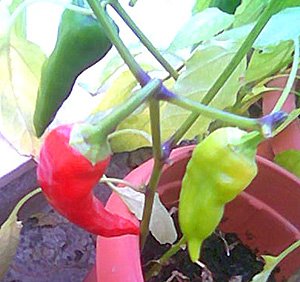
Just in time for the Eurovision Song Contest, I harvested these three peppers and took them with me to my sister's eurovision party. Jolly japes all round. Only George managed more than a couple of exploratory bites - so hot were the peppers!


Three peppers in three different stages of ripeness, shown on 22 May 2006.


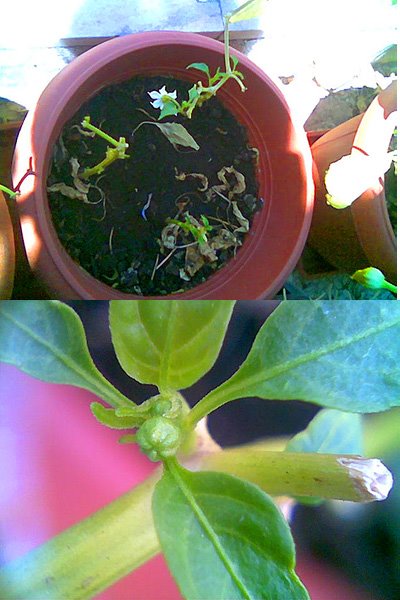
Some time before 28 May 2006 I had taken to the plants with clippers to remove the unnecessary bits of plant that had been holding the peppers up while they were growing but had no role to play any more. Despite the heavy pruning, more buds were appearing regularly.


This image is from 6 June 2006 and represents peppers of both sorts, collected and given to Komni. The plants were then pruned back a hell of a long way, and we now have a second batch of peppers on the way. I will leave this second batch to use for seeds.

So - peppers from peppers to plant to flower to peppers again…

More writing about balcony-gardening when there is time.

Wednesday, July 12, 2006

Shine on

Well, it was going to happen sooner or later.

Monday, July 03, 2006

New Acropolis Museum - first day of exhibition

So we went to the opening with K, George and an increasingly pregnant Poppy of the exhibition of finds from the area where the New Acropolis Museum is being built.


The new Museum, being built next to the Weiler building under the Acropolis.


George, Poppy and K

Far too many people in too small a space and politicians and the teams of cameramen following them gave the whole trip to the museum a different feel altogether. The exhibition houses some of the findings from the site of the new museum being built just a few tens of yards away, displayed in cases made out the building materials being used on the new museum. The site cuts through a good slice of old Athens from classical through to late roman and early byzantine. The site will be visible through the floor of the acropolis museum making it a huge almost open-air museum. Poppy had worked for some months before leaving for the UK on the site and had been informed of the opening by an archaeologist friend who was involved in the excavations of ten years.

On arrival and after all the faff of waiting for the Minicult to arrive, we went in and sat through speeches by inaudible archaeololigsts and the booming Minicult himself who mostly talked bollocks using rhetoric worthy of midday soap operas rather than someone with the syllable "cult" in his title.


After the obligatory chamber music and mad crush for the drinks table, and after some of the most impolite and unbecoming scrambles for the unimaginitive but tasty enough canapés K and I managed to enter the exhibition. George and Poppy had left for elsewhere.

Poppy's friend was showing someone famous around. Well, famous enough to be shown around by one of the excavators, but not famous enough to be someone I recognise. The plus side to all this fame and what have you is that K and I and half a dozen others managed to piggy back on Tatiana's tour of the finds and at the same time benefit from both her enthusiasm for and knowledge of the site.


The exhibition is separated into thematic sections.


The first section is worship. In this section we have some good marbles statues of deities which are very rare indeed outsdie the east - there are not many excavated sites in Greece which are contemporary with some of the sections of this site, so although we got the oriental gods here and there, what was found in this esentially rescue dig was unique in Greece. The first "cool" find is a statue of "Isis Panthea" an Isis figure from the second or third century AD.

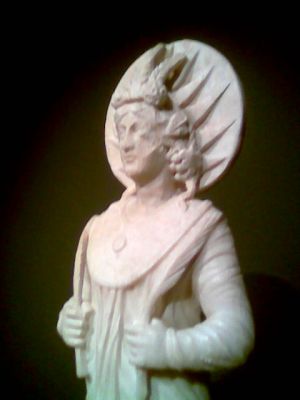
Isis Panthea

Why Panthea? - well, she’s got the sun disk of Sol Invictus, the corn sheaths of Demeter, the aegis of Athena, the grape clusters of Dionysos around her ears, a snake running around her body, reminiscent of Asclepios, and she is standing on a funky crocodile. All the gods and goddesses together… Next up comes a Zeus Heliopolites – Zeus from Heliopolis (today’s Baalbek), with a whole bunch of other deities on his tunic.


Zeus Heliopolites, appearing after coming all the way from Baalbek, Ladies and Gentlemen

We also saw a nice representation of the Artemis Astarte with the many breasts.

Artemis of the many breasts...


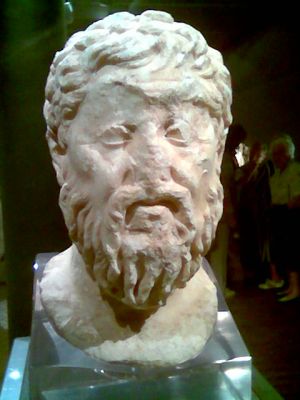
There was a good bust of Plato from a Herm, and a whole bunch of home implements and pottery, commercial stuff and tradesmans' craftsmens' stuff in the economic activity section.

Plato

One thing I liked a lot was how they give the concept of stromatography a real good showing with this conceptual well with many pots discarded in it over time after it had silted up.

Nice representation of the stromatography in one of the silted up wells


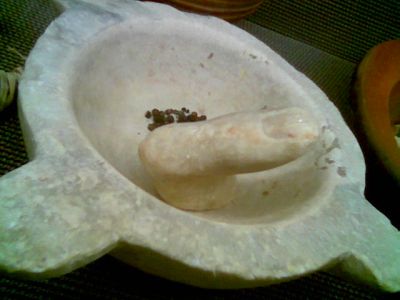
I also liked this thumb shaped mortar for the pestle – very nice and apparently not uncommon, sitting amongst the spice containers and cooking vessels in the cooking section of the exhibition.

Can't find something witty to say - but I'm working on it...

In all the exhibition is really quite worth it, very nicely put together museuologically and interesting for the wealth of second and third century AD items on show all in the same place.


Like I said before, the experience of seeing it under the wing of one of the excavators made the whole thing that much more fun.

All venice posts together

In January of 2005 K and I visited Venice and Ravenna.

The story is told in the following posts:

Venice - Jan 2005 Part I
Venice Jan 2005 - Part II
Venice - Jan 2005 Part III
Venice - Jan 2005 Part IV
Venice - Jan 2005 Part V
Ravenna - Jan 2005, Part I
Ravenna - Jan 2005, Part II

Enjoy the story all together.

Ravenna - Jan 2005, Part II

We made our way to the first of the two baptisteries we intended to visit.

A baptistery is that part of the church (in early times a separate building in its own right) where baptism would take place. In the early days when those yet to be baptised vastly outnumbered those already baptised most baptisms were carried out on adults, and the baptisteries reflect this in that the font is big enough for a full size adult to be baptised in it.

The two baptisteries in Ravenna were built by the two rival sects practising in the empire at the time. The preferred form at this period is an octagon, and I have heard that this is to represent each day of the period from the entry into Jerusalem until Christ's resurrection. Anyway - what we have going on in the empire at the the time the churches of Ravenna were built is two competing sects of Christianity living side by side. We're not talking sects in terms of catholics and protestants thinking they have a different dogma, we are talking about a full blown disagreement in the nature of Christ. Let me just write those words out again, because they are important and to our post Chalcedonian mindset such a thing is not a matter for debate and / or discussion.

The nature of Christ.

There, I have written it again. We are all to some extent familiar with the concept of the creed. It's that bit of the service beginning with "I believe" or "credo" (or whatever) and it is essentially an affirmation of belief. In there we see all sorts of funky stuff, used to describe Christ. Like, he is the only son of the father, he is begotten not made, of one being with the father, etc. etc.

"Fair cop, guv", you might say, but I ask you why do we have this creed with all the rhetoric and reaffirmation of Christ's divinity? What need is it addressing? What's at stake? Yes - the trinity, father son and holy ghost - fine, but why labour the point when it comes to the son's divinity?

Once upon a time, in the second city of the newly officially Christian Roman Empire, there was a chap called Arius and Arius was bishop of this city, Alexandria. As bishop of the second most important city in the empire, he had some sway. Egypt and north Africa had always cast Christianity in a strange mould of their own and there the people clung on to strange (sometimes gnostic) ideas. These are the sorts of ideas which then come out of the sands seventeen centuries later to be turned into "National Geographic" cover stories.

Against this backdrop and only a generation after Origen, comes Arius with his separation of the nature of Christ the son from that of God the father. According to Arius, Christ was not "uncreated" and not wholly God in the way that God the Father was God. Arguing that the father was greater than the son and existed before him, the Alexandrine bishop managed to drive a wedge into the divine nature of Christ, which was to have repercussions many hundreds of years after the anathemas proclaimed on him. Think about the incongruity of the terms "one who never changes" and "baby Jesus"…

Before anyone could do anything to check the progress of this idea (which may have been potentially more palatable than the standard description of the trinity to the less philosophically inclined western areas of the empire), it had spread like wildfire, to the extent that arguments would erupt in the streets of Constantinople and, more significantly, to the extent that the religious figures sent to convert the non-citizen Goths who had recently begun to work as mercenaries in the armies of Rome were followers of Arian. Not only that, but the Arian theology buttoned itself onto the existing beliefs of the Goths who worshiped a father / son deity which had the father more divine than the son.

The council of Nicea gave christianity the Nicene creed with its use of the term "consubstantial" or "homoousios" which basically put an end to Arianism in the core parts of the empire. So these beliefs were anathematized and life went on in the empire with the Arian Goths on the periphery. Theodosios in the late fifth century had seen to it that all pagan worship ceased, and made all sorts of deals with the Goths to give them land for military service, despite their Arianism.

At some point, though, the goths were tired of sitting on the other side of the Danube and the time came for them to cross the river and make a bid for Rome. They managed to take much of Northern Italy. Rather than raze and rebuild, the Goths did something politically clever, in that they allowed the local population to continue their worship as they were wont to do, and introduced a parallel hierarchy of Arian clergy to tend to the Arian Gothic elite, which managed in this way to keep itself separate from their Trinitarian subjects.

Phew

So - Italy and especially Ravenna at this time (until Belissarius, essentially) was home to a coexistence of two very different "Christian" sects.

The reason for all this blah blah blah is that a) the art of the orthodox and heretical differs in the details in a way which is interesting to note and b) many formerly Arian buildings were taken over by Trinitarians after Belissarius re-conquered Italy for Rome. Belissarius we'll talk about some other time.

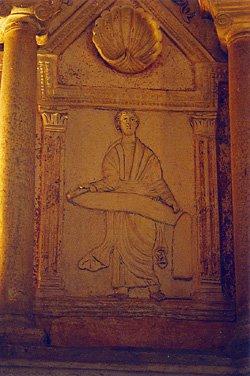
Against this backdrop, we can now move into the baptistries, and it is finally time for some of what might be the last glimmer of classically inspired sculpture before the renaissance came along. K and I particularly like the guy in this image as we both independently saw in him the patron saint of ironing. I am not sure who this funky low-relief guy is, but he stands below the dome of the baptistery of the orthodox.


The first recorded extreme ironing aficionado


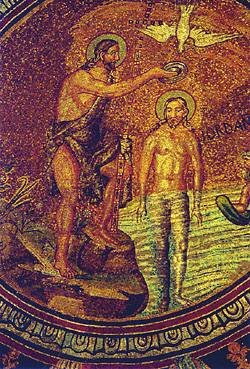
The baptistery of the Orthodox is of course more notable for the mosaic decoration adorning the vault depicting a belts-off-trousers-down Jesus in the water being baptised by JTB.


JTB and the skinnydipping JC groove on down in the Jordan wid da pijins(or something)


Christ is depicted as a fully grown bearded man. He is God, consubstantial, coeternal. Compare with later when we visited the slightly earlier baptistery of the Arians.


JTB and the skinnydipping JC groove on down in the Jordan wid da pijins (or something)
Doesn't JC look a little dumpier, beardless and more boyish - like he is not quite as fully divine as the Father?

So after baptistery fun in these octagonal buildings displaying the last embers of truly classical art, we were ready for a visit to a good old fashioned basilica with three naves and some processional mosaics with repetitive undistinguishable saints parading towards the Christ figure. On the north side the saints process, walking from a depiction of Theodoric's palace towards the east. On the south wall, the lady saints are walking from the harbour towards the east. Have I not mentioned Theodoric? Did I throw him out at you without any explanation? His mausoleum had a brief mention in the previous Ravenna text.

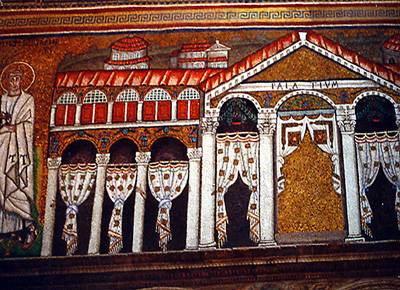
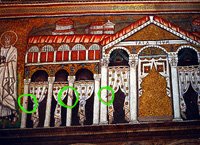
Theodoric the goth, then. He was king of the Goths who had come to scare away those who had overrun Italy at the behest of Zeno, emperor of the Romans. The Goths had then set themselves up in the ruins of the empire in the west. Taking on Roman airs and titles, playing the system from the inside and letting the roman aristocracy carry on as before. The gothic kingdom was ruled from Ravenna from the Palace pictured in the mosaics of the basilica of Saint Apollinaris. From the palace helpfully labelled "PALATIVM" in the mosaic. From the palace which is less than forty yards down the road from the mosaic depicting it.

The Palace of Theodoric, setting off point for the procession of saints depicted in the basilica of Saint Apollinaris.

Theodoric's palace, in the mosaic, featured members of his family standing in the porches. Members of the royal family with haloes (normal for imperial portraits of the time) adorning the porches. And then along came Belissarius, strong -man of Justinian and restorer of orthodoxy to an Italy suffering under the heretical Goths.

And there, in the basilica of Saint Apollinaris, first to go were the Arian Saints. Up went the Orthodox saint names... and then away go the family of Theodoric. In their place, some very fashionable curtains were put up. You can see above the curtains where the haloes would have been, but more obvious, and highlighted in green in the next image, are the body parts painted outside the gaps and over the columns. They were never taken away - it is not known why and the hands of Theodoric's family are still there to be seen by whoever should visit the church.


Same image as before with highlighted body parts

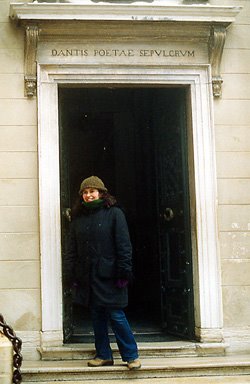
Not far from the palace and cathedral of Theodoric sits an unassuming building for which you really have to be on the look out or else very much into the back-street narrow-alley form of exploring new places. Inside is the tomb of Dante.

K emerges from the tomb of the poet

In Ravenna we discovered a very nice café type thing with good hot chocolate and also were lucky enough to catch the first day of the sales.


The next day we were off to Classe - the city named after what it did... Classe takes its name from Classis - fleet in Latin - for it is here that the imperial fleet would moor in the days when the empire was run from Ravenna.

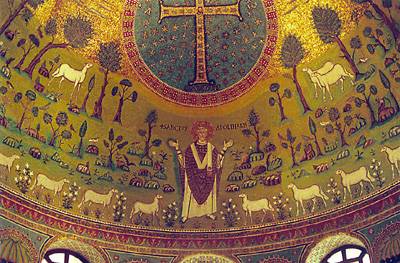
O lamb of God...

In Classe we found the last of Ravenna'a UNESCO inscribed buildings - the church of Saint Apollinaris in Classe. More mosaics, this time curiously pastoral, to bid us good bye as we set off doen the fog filled autostrade towards Ancona - a place known to me from childhood voyages as a harbour town with no intrinsic interest.

How wrong I had been! Ancona is a harbour town - yes, it's position and what have you make it a perfect place for setting off across the Adratic to a number of destinations.

The first surprise - seeing as we had arrived about an hour early, we had time to explore - was the triumphal arches on the waterfront. I did not remember them, of course, the last time I had been through there I didn’t know what a triumphal arch represented and what the roman empire was. My sole source of information had been "Carry On Cleo" with Kenneth Williams as a rather camp Caesar acting opposite Sid William's raunchy Mark Anthony, but I digress.


Triumphal arches in Ancona with a view to the church on the top of the hill

The foreground arch in the picture as far as I can recall was set up by Napoleon. The one behind was set up by Trajan. The Ferry was delayed arriving - and therefore would be delayed in departing - by about five hours, so we had a good chance to walk about and get to know the city a little. We decided to walk up to the church on the hill overlooking the harbour and were rewarded with the exteriors of some baroque buildings on the way up and fine views from the top. Of course, all this was not really quite so exciting as the building at the top.

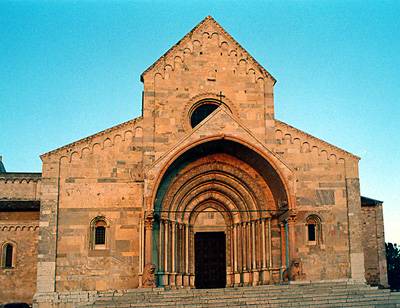
The old cathedral on top of the hill in Ancona

We were confronted by the rather gothic entrance with the arches all one inside the other, flanked by lions taken from somewhere I don't recall. The basilica itself was originally just a standard basilica, and took on its cruciform groundplan in about the 13th if I remember. The great thing about it is that in the basement you can see a bunch of Doric column bases from what used to be the old temple of Aphrodite which would stand above the harbour - sailors being sailors in all centuries no doubt had much to do with this choice of deity for the old temple.

The boat came, we boarded and set off again for Patras and later Athens.
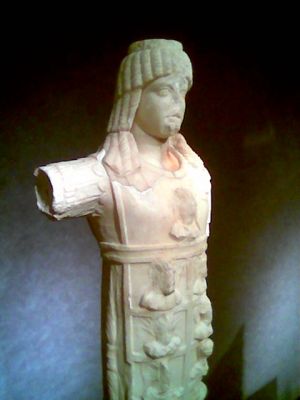
The Venice / Ravenna trip was over, six days after commencing, the write up finished some five hundred and forty days after commencing. Hmm.

Now time to start writing up what came after Venice: Istanbul/Constantinople in June 2005 etc, Sikinos / Ios and Ikaria in August 2005, Meteora in September 2005, Paloumba for the epiphany of 2006, Paloumba for the first day of Lent of 2006, and Kastelorizo for the eclipse of 2006… all coming soon, oh yes.

Thursday, June 29, 2006

Aaaarg

AAAAArg: "SilkQuit Meter v2.60" Just downloaded I am so close to lighting up again... 6364 ciggies not smoked in the ten and a half months since I quit. I must keep thinking about this today.

Tuesday, June 27, 2006

Venice, redux

Finally putting up some moving pictures from Venice - there aren't many of these, but here is the first attempt. The footage was captured by my mobile phone, a battered and now-ailing Nokia 5410...

White soil on the marmara...

Chalky soil or posibly rock-salty soil on the marmara.


Still playing with this toy...

Monday, June 26, 2006

You tube - new toy

Testing testing


1, 2, 3

Thursday, June 08, 2006

Alright alrighty

So OK like chill. I've been busy elsewhere doing some editing to wikipedia articles about subjects I like to think I know a little about. I have managed to stay out of a revert war on one touchy subject, and so far most of what I have written has stayed written.

In other news a lot of travelling, bad sleeping habits and bad eating habits all taking their toll, especially in the light of K not being around at the weekends to look after me. She's helping to look after her sister's kids at the moment and won't be back for another ten days... waaaaaa!

Wednesday, May 17, 2006

So, where is groupie??

Where are you, little miss "I've disappeared for a month and a half leaving my fans with a feeling of huge empiness"?

(that'll learn her!)

Friday, May 12, 2006

Roger Waters in Athens... Should I go or not?


Decsisions decisions...

If I go, I miss two otherwise also mutually exclusive events. My choices are as follows:

1. Go to Roger Waters concert (practically all Sunday)
2. Go to Selinitsa with the caving seminars (totally all weekend)
3. Pick up K from the airport after not havng seen her for a full five weeks

There is no way to do a combo. Selinitsa is five hours drive from Athens.
K has urged me to go and not miss on the event. The tickets are priced at either ~50 or ~100 Euro.

Roger Waters, man. Doing all of DSotM live. I don't think I should miss that. Selinitsa will be there next year and the year after. Have a look at some Photos of Selinitsa by Satoshi Goto and Elias Kazais in Elias' album at the Selas photos site.

It is one of the more beautiful horizontal caves in Greece, frequently visited by beginner cavers and well worn cavers alike. The latter visit not least because of the cave diving opportunities and the recent link between two systems made by our friends at the SPELEO club.

Basically, I'm going to Waters and I am probably going to delay my flight to Sofia a few hours on Monday to allow me to sleep and stuff.