Showing posts with label Argolid. Show all posts

Tuesday, December 27, 2011

Merbakas: A byzantine jewel in the Argolid

Byzantine church in Aghia Triada, Argolid, April 2011

The church just outside the modern village of Aghia Triada is dedicated to the dormition of the theotokos. It was built some time in the period between about a century before and after the fourth crusade. The actual dating is one of the great mysteries of the building as it rests to some extent on written evidence (which may or may not be flawed) for the building of a nearby stylistically similar church and to some extent on the immured ceramics. Τhe dating of these are also much debated by scholars, not least because the dating of the immured ceramics had been 'fixed' by a possibly inaccurate date for this church itself.

The village of Aghia Triada used to be known as Merbakas. The old name is largely forgotten outside Byzantist circles apart from its pejorative use in the phrase: "Καλά ρε φίλε, απ΄τον Μέρμπακα είσαι;" as used even into the 1990s by Nafplio kids to indicate a school friend is particularly stupid.

I first heard of the village in 1988 when touring the Peloponnese with JHWM (and PAGS) although there was no time to visit the church, and again in 1990 when SFM replaced PAGS. I don't think I actually saw the church itself until 1995 or even as late as 1998, when it was still serving as the cemetery church and the village cemetery itself still surrounded the church.

I have tried to drive past the church every time I have visited the area since then. Every time I visit, I see more and every time I leave I read more about it and around it and come back with more to look at. There is so much to look at in this one small Byzantine building and while something is urging me to insert the word intertextuality in here somewhere, I fear that so many years away from mildewey libraries may have blunted my ability to pull off that sort of writing...

Merbakas is unknown as a toponym elsewhere in the Balkans or even in Turkey. The word is not encountered in any of the languages of the peoples who have at some time established themselves in the Peloponnese. However, the Dutch village of Moerbeke happens to be the place of origin of William of Moerbeke, Latin bishop of Corinth, a Dominican and a pretty shit-hot classical scholar of his time. So while many chose to deny any link with Moerbeke for whatever reasons, if we do so, another William (almost contemporary with ours, but Franciscan and an Englishman from Ockham in Surrey) would have been rightly upset.

I cannot write about the similarities and differences with the churches at Areia and Chonikas, nor do I know enough about the ceramics to make some sort of judgment on the date of the church and therefore the likelihood of the patron being William of Moerbeke. Guy Sanders has a paper up on academia.edu in which he argues for the late date and the patronage of William. Although every time I read the paper I end up on different sides of the fence as to whether he convinces, the questions being asked are definitely going in the right direction.

The late date is supported by the ceramic evidence. The church has a whole lot of ceramic bowls immured in the walls. The mortar used has been shown to be one with the mortar used in the building of the walls: hence the bowls are contemporary with the original building, and dating the bowls will allow dating the church.

Immured ceramics, south wall, Byzantine church in Aghia Triada, Argolid, April 2011


The bowls in this images are called Grid Iron Protomaiolica bowls. Similar bowls are immured in the walls of the Dormition at Gastouni which has been recently dated to the last quarter of the 13th Century. The bowls are the product of a Western (Italian) workshop. Other immured ceramics have an eastern provenance, such as the Zeuxippus ware from Constantinople. The choice of ceramics from both edges of the Greek world, east and west is used by Sanders to support his position.

View form the East, Byzantine church in Aghia Triada, Argolid, April 2011

This view from the apses gives an opportunity to see a number of features of the church. From the ground up, we have the three steps reminiscent of an ancient stylobate. Christianity standing on ancient foundations, or triumphing over the old religion? The lower courses actually use building blocks taken from the Argive Heraion a few kilometers distant, while the blocks in the higher courses were brought from Corinth, presumably quarried fresh from local stone.

Apses of the Byzantine church in Aghia Triada, Argolid, April 2011

The higher courses are in cloisonné style with decorative brick-work at the top made to look like a Greek key (meander).

Central apse of the Byzantine church in Aghia Triada, Argolid, April 2011

The central apse, with its Gothic engaged columns in the trilobed sanctuary window, and more Greek key decorative brickwork. A meander is also visible running horizontally in the marble under the windows.

So, going back to the spolia... apart from the otherwise non-descript blocks from the Argive Heraion (which I still have yet to visit), there are two blocks of spolia with figured representations still on the church (a third is in Copenhagen, for some reason), in addition to a classical sundial reincorporated into the wall of the church and two blocks bearing inscriptions.

Immured spolia and gothic capitals on the drum of the Byzantine church in Aghia Triada, Argolid, April 2011

The sundial is on the south wall towards the SW corner.

Immured spolia on the Byzantine church in Aghia Triada, Argolid, April 2011

One of the two, figured spolia. The low relief sculpture is a classical grave marker with three figures on it. There is an inscription which reads something along the lines of "[Ε]ΥΠΟΡΟΣ ΕΥΠΡΑΞΙΣ [Ζ]ΗΑΝΤΕΡΩ[Σ]" which is probably three proper names. The Inscriptiones Graecae online gives the text as: Εὔπορος Ἀντέρωτος. Εὔπραξις ζῇ. Ἀντέρως and if I had not looked it up in the concordance, I would not have noticed the lower line of text underneath the text Εὔπορος. Have I mentioned how much I love the internet? The inscription is known as IG IV 539. Given the probably correct reading in the IG catalogue, it is probably a marker for Euporos (on the left) who was the son of Anteros on the right and is survived by his mother Eupraxis (centre).

It is said that the village ultimately gets its modern name from this grave marker, by way of the village church, which was dedicated to the holy trinity because of this very prominent spolion on the corner of the village's cemetery church.

Immured sculpted spolion in the north wall of the Immured spolia on the Byzantine church in Aghia Triada, Argolid, April 2011

The second stele on the north wall of the church, shows two more classical figures, with no discernable inscription. The placing of the two grave stelai and the subject matter are used to argue for the involvement of a Latin churchman in the foundation and building of the church at a time when the argument over the filioque was ongoing. The north stele shows two figures (argued to represent the father and the son from whom the unseen spirit is presumably processing in a western way) and the south stele shows the holy trinity in all its orthodox oriental glory. I don't buy into this in a wholehearted way, although as circumstantial evidence, I feel it ought to be mentioned.

Next up, the two spolia with inscriptions, one placed near the north door, the other near the east door. The one near the east door I did not know about and as a result, I have not got a photograph of it (and it is not immediately obvious when looking for it, else I would have noticed).

Immured inscribed spolion in the North wall of the Immured spolia on the Byzantine church in Aghia Triada, Argolid, April 2011

This is the first inscription, reading: Q(UINTO) CAECILIO C(AII) F(ILIO) METELO | IMPERATORI ITALICI | QVEI ARGEIS NEGOTIA(NTUR). Now the Metelus in question was the chappy who conquered Crete for Rome, thereby clearing the Aegean and this part of the Mediterranean of piracy. To me the echoes with the council of Lyons which amongst other things (such as the union of the churches) sought to suppress piracy are a little faint, but it has been argued that the founder of the church was aware of the historical Metellus and wished to make such a link. In any case, it is strange that a text in latin script which would not have been understood at all by the local population was immured with the inscription visible.

The final spolion bears a Greek dedicatory inscription and is immured close to the east door. As I have already mentioned, I have not seen it.

Elaborate decorative brickwork and bell tower at the Byzantine church in Aghia Triada, Argolid, April 2011

The bell tower above the east door, where the spolion bearing a Greek inscription is to be found.

Gothic capital on drum of the Byzantine church in Aghia Triada, Argolid, April 2011

The dome colonettes, showing gothic architectural influences. The crocket capitals are a decorative element common in Gothic architecture. This element is also used as an ornament on furniture and metalwork in the Gothic style. The name derives from the diminutive of the French croc, meaning "hook", due to the resemblance of crockets to a bishop's crosier.

South door of the Byzantine church in Aghia Triada, Argolid, April 2011

And final photo – the south door, which is built in the Byzantine rather than the western style (all other doors on the building are built in the western style). In Byzantine architecture, the jambs are separate from the matrix of the walls, as they are here. In western doors, the jambs bond with the walls.

Next time I have to go back, with all this in mind, to take photographs which illustrate the points in question better. As it is, the information on the church I got from the internet fit reasonably nicely with the photos I took, but not perfectly. Next time, it would be nice to get inside too to see the frescoes of St. Leo of Catania and to see how truly western some of the non-figured frescoes are.

Thursday, December 09, 2010

Reopened archaeological museum in Nafplio / Nauplion / Nauplio

On one edge of Constitution Square, opposite the old mosque which now serves as a cinema, sit the Venetian-era barracks of the town's military garrison. This building now houses the offices of the local ephorate of antiquities and the town's archaeological museum. I am particularly fond of the ephorate here as they issued me my very first free-entry card to the antiquities of Greece and did so in one day! It was not until many years later that I realized how lucky I was to get the card issued so fast.
External view of the Museum of Nafplio on Constitution Square.
Following a lengthy refurbishment which seemed to last most of the present decade and which saw little seismic stickers put all over the building and the bulk of the Mycenaean finds go to the new museum at Mycenae, the Nafplio Archaeological Museum has been re-opened with a new layout and a refreshingly decent set of texts accompanying the finds. A lot of stuff has come out of storage, not least the Francthi child burial (more about that later) so the visit I made in April this year felt in part like a visit to old friends, and in part like a new museum altogether.

The museum houses finds from many of the sites of the Argolid, including Tiryns, Asine, Berbati, Francthi, Dendra / Midea, Kazarma, Nauplion itself and probably more that I do not recall. It used to be the best collection of Mainland Bronze Age stuff in Greece after the National Archaeological Museum in Athens, although now I would think the title of second best has to go to the Mycenae museum itself.

The museum is organized on the first and second floor of the building as before, with the first floor dedicated to the prehistoric periods and the second to the Iron Age onwards. The finds are exhibited either according to findspot / period or according to type - meaning that we have all the Franchthi finds in one corner, and all of the Dendra finds in another, but at the same time, the MH vessels are placed separately from the figurines, which are separate again from a bunch of sherds with imprints on their bases showing either mats or leaves.

The truth is that visiting with A in the pram was not 100% practical (despite the AMEA / wheelchair lift which we preferred not to use) so we did not spend too much time on the top floor which in any case has marginal interest.

The Bronze Age floor or more accurately Neolithic and Helladic floor was really quite fun. First in on the left, there are the finds from the Kazarma tholos including some nice palatial style jars, together with a good photograph of the state of the tholos at present (only the back wall is standing). Moving round the room clockwise, we have the cemetery of Dendra along the wall, joined by Asine later on and the Dendra panoply in the middle of this part of the room. The panoply is displayed nicely along with other bronze finds from the tomb allowing the visitor to build a good sense of what goes with what and what finds are from which tombs. The Dendra finds are displayed next to a scale model showing the placement of each tomb in the hillside. This provides another valuable link to the findspot which enhances the visitor's understanding of the finds as part of a functional whole rather than as individual pieces of art each independent of those around it.
Kazarma: display of palatial style vases together with other grave goods.

Dendra: Model of the cemetery showing the relative locations of the Tholos Tomb, the Cuirass tomb and the other Chamber tombs.

Dendra: Nice schematic LH murex shell on grave goods .

Dendra: the finds from the Cuirass tomb, all together in one case.

Further down we pass the Asine finds, with some good diagrams of the tombs as excavated and this is followed by some cases containing only figurines, whether wheelmade or hand made from a number of different locations and of different sizes, all presented together. These include the famous Lord of Asine.
Asine: sketches showing the findspots and context of the finds together with decent texts.

Asine: the "poor" man's Vapheio cup! ceramic Vapheio cup showing a goat rather than the bull one would expect...

Various sources: various figurines whether wheel-made or coiled, all together in one case. The so called Lord of Asine is the solitary head to the right of the image.

Moving on, there are finds from the MH (including some stirrup jars with simple painted motifs) and part of the plaster floor of the megaron at Tiryns showing two dolphins, heraldically opposed.
Various: MH era ceramics, including a coarse-ware bowl with carbonised figs.

Tiryns: painted decoration from the floor of the throne room of the megaron.

Moving on clockwise, we enter the MH period properly and this is represented by burial goods from Berbati and elsewhere. The finds reproduced in the burial of the MH with articulated skeleton are in stark contrast to the finds on show from the LH graves of Dendra.
MH burial reproduction: A is surprised at the austere nature of the grave goods.

The EH is represented by impressed hearths and pottery from Tiryns and Berbati, and the room finally closes with the NL just before the door leading us to feel that perhaps we should have gone anti-clockwise rather than clockwise round the room! Apart from the Urfirnis pot which used to be the highlight of the Franchthi section in the old museum, there are now a great number of small finds on display along with one of the famous child burials of NL Franchthi - again articulated with the grave goods in place in the display. The Franchthi section also has photographs and drawings of the cave itself with much information.
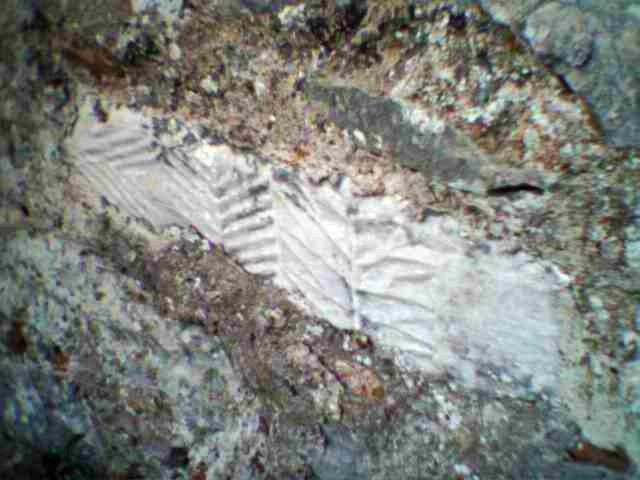
EH Pot bases: Impressions with plaster "positives", with some EH sauceboats in the background (sauceboats are the archetypal EHII type shape).

EH hearth: one of a number of such ceramic hearths decorated with relief patterns. This one is from Tiryns.

EH hearth: one of a number of such ceramic hearths decorated with relief patterns. This one is from Berbati (I think)...

Franchthi cave: Decent text introducing the visitor to the complexities of the NL.

Franchthi cave: Urfirnis ware - the best of the best of NL ceramics.

Franchthi cave: infant burial on display.

Franchthi cave: repaired ceramic bowl - shows the value of ceramics at the very beginning of their use.
The texts are well thought-out and the layout of the finds (especially the articulated skeletons) adds much to the visitors' understanding.
As I said - this is one of my fave museums anyway, but I think I have to give it a thumbs-up for the way it has been refurbished, re-planned and re-opened. Well done Δ ΕΠΚΑ!

Second floor: ceramic masks - an opportunity for some interaction with A.

Tuesday, February 13, 2007

A weekend in the Argolid - part 2

So here we go with the description of the second day of the weekend in the Argolid, during which we set off to look for the Triassic fossil beds of Epidaurus on the old route from Mycenae to the coast.

We set off on the road out of Nafplio a little after breakfast ceased being served at the Marianna Rooms under the castle and after a short drive around the fortifications of the "Its Kale", or more altaicly Uç Kale we set off east for the Epidaurus area.

A quick word on the Uç Kale whatsit - the words mean three forts or three castles in Turkish and are a reference to the triple fortifications of the hill above Nafpio on which the Xenia and Nafplia Palace now stand.

The video below opens with a view from the hotel, shows some of the Its Kale fortifications including the winged lions which the venetians saw fit to carve into flat surfaces everywhere. It's a little jerky in places, but you get the idea.


The plan was to go out towards Ligourio, have a look around in the Natural History Museum in the town and then to go fossil hunting for ourselves in the area before the theater. If there was time, we would look for the old medieval church which is covered in classical spolia which is meant to be in Ligourio.

On the way, with K driving, we passed a MiniCult sign, in the standard 1:5 side ratio and the brown cultural sign colour. Mycenaean bridges, it said. This was quite a few km from the Mycenaean bridge I know about on the route, although I have often read about there being more thna one bridge no the way to Epidaurus. Well, we did what every self-respecting bronze-age loving sort of guy does and we stopped the car and set off along the foot path for the bridges marked by the signpost.

After a brief walk of about 300m on a footpath worn away in places by recent strong rains we reached a signpost indicating that there are two bridges, one very close, the other an unknown distance away down a continuation of the good footpath. I would not suggest doing the walk between the two bridges during normal daytime hours in the summer, leave it for late afternoon or early morning. I would love to walk the whole route some day linking Epidaurus on the coast to Mycenae via Midea.

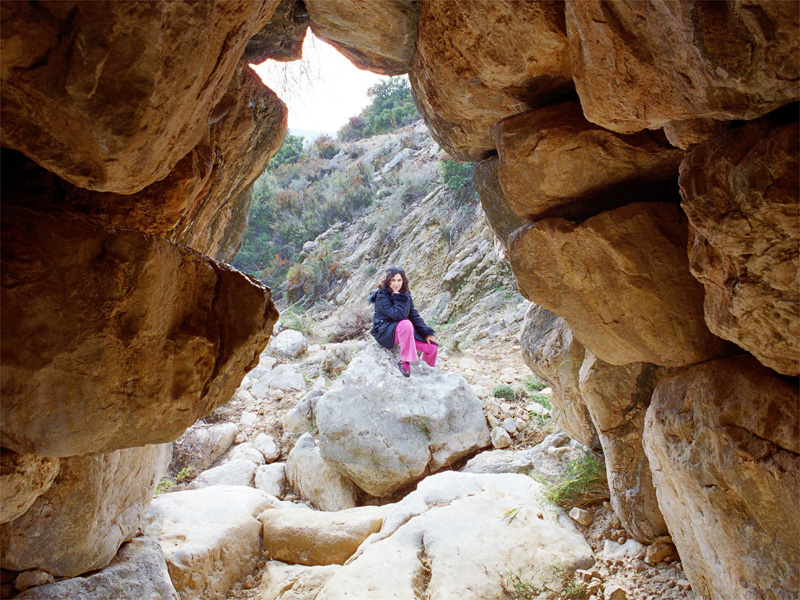
Korinna at the Mycenaean Bridge
Here is K with the bridge's corbelled arch framing her. Corbelling is a vaulting technique whereby a space can be vaulted not by making use of the arch (first discovered and widely implemented in the Hellenistic times) but by positioning each successive block in such a way that although it overhangs the previous, the forces produced do not cause instability as they are sent downwards to the base of the structure. Something like the cantilever effect, I am told. The system was used extensively for the so-called galleries at Tiryns and, of course, in the construtcion of tholos / beehive tombs.

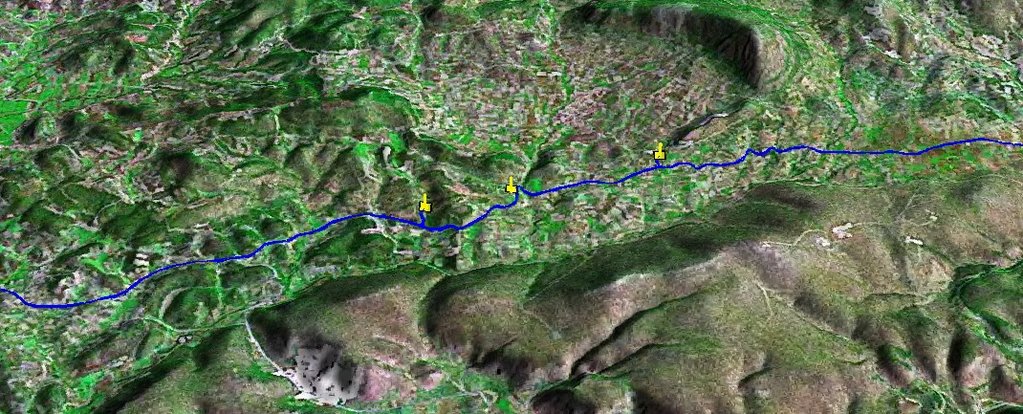
Three waypoints - three bridgesThe Three yellow squares represent the three bridges visited.

The photo in the trailer post was taken in front of the well known and very photographed mycenaean bridge at Kazarma. I have photos of myself with this bridge from maybe even ten years ago, maybe more. We found the other end of the nice new footpath here, confirming that the second bridge referred to at the first was the one at Kazarma.

I hope some day to be able to get organised enough to put up a photo from every one of my visits to the bridge.

Next up, and really rather happy with our successes in seeing new things in an old neighbourhood, we took a left turning to go find the third of the three bridges which are currently signposted. The signposts lead you up a narrow road which stops abruptly next to a local resident's house. Fortunately this local resident keeps her yard gate open, otherwise there would be no space to do the 3 point turn required if one is to avoid reversing back to the main road. The bridge is close enough to the main road to walk easily rather than to go through the whole three point turn and reversing thing.

Third bridge messyThe rubbish around the third bridge we visited.

We were rather disappointed with K to finally reach the final bridge. The recent heavy rains had brought a whole lot of crap down the hill and what we ended up seeing was less an archaeological site than a tip - complete with what seems to be the mandatory child's bicycle. I am not sure whether this is visible in the photo, but it should be clear in the video.


The video opens with the walk from the car to the first bridge, some looks at the first bridge, the road on the way to the Kazarma bridge, some walking around and into the bridge of Kazarma, complete with some close-up views of the masonry and some little numbered dots that the archaeologists have put on the bridge. From there, we have a drive-by shot of the Kazarma Tholos Tomb - pretty much contemporary with the bridges, or possibly slightly earlier (to judge by the size of the blocks in the masonry). We then have the drive up to the local lady's house and the walk to the third bridge. I know I could have made the editing tighter, but when one is rushed, and has no real natural flair, one sacrifices quality for time - that's what I say to myself to allow me to sleep at night.

Putting the bridges firmly behind us and a little disappointed by the third bridge, we continued on to Ligourio. I had mixed feelings about the Natural History of Ligourio ever since I heard about its opening and especially given the quality of other road-side private museums I have visited.

Natural History Museum of Ligourio
Collection of shells spelling out the museum's name

Entering, I was pleased to see the number of posters on geologic or ecologic themes, many of which were obviously brought from abroad and translated specifically for the museum. The museum is laid out on one floor, in a number of rooms with most emphasis being placed on marine fossils from the Paleozoic and Mesozoic periods, although some more recent finds from the Pikermi bone beds and from the Rafina area were also present. There was obvious emphasis placed not only on the local fossils (from the Epidaurus area) but also on Moroccan fossils which had been purchased specially for the museum.

The lady told me that photography was allowed and here is a selection of my favourite shots from in the museum:

Crinoids
Crinoids - these frond shaped critters are animals which anchor themselves to the sea floor and filter nutrients and plankton and stuff out of the seawater in order to eat.


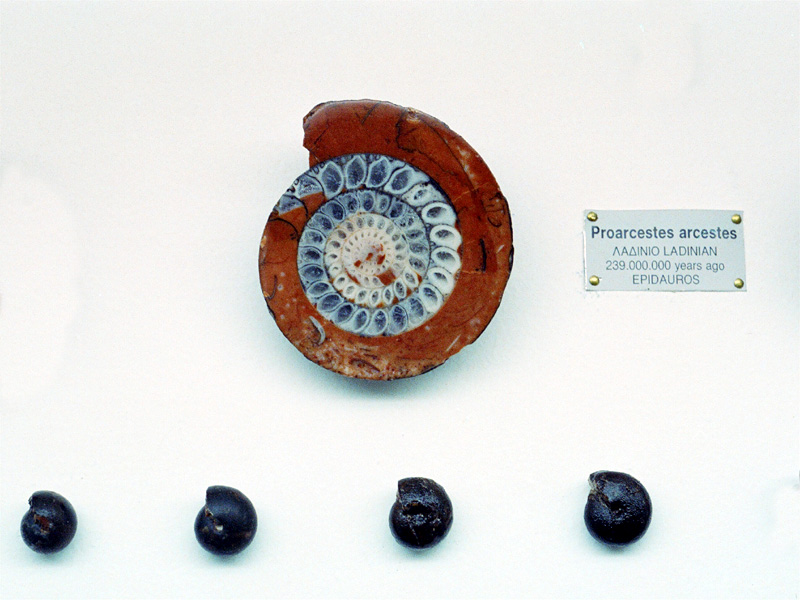
An Epidaurian ammonite sawn in half and polished to display the internal structures preserved.


Death assemblages of ammonites, again from the Epidaurus region


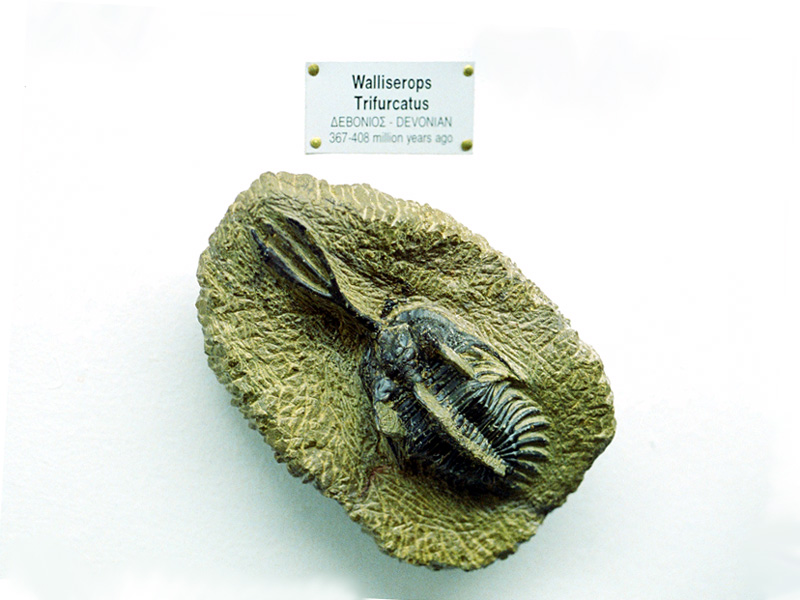
A trident-faced trilobite of the Walliserops Trifurcatus species.


The video shows a walk-around of the main parts of the museum. One take, a little rushed.


I bought my very first trilobite from the museum shop for the sum of 10 Euro - not a bad deal I think although I have no idea how much trilobites cost elsewhere.

We had managed to gather no information about the whereabouts of the Epidaurus fossil beds, but we had a pretty good idea of what we were looking for - essentially black round things sticking out of the pinky-red matrix.

We set off from the museum and following a lead found on the net, we circled the nearby hill which we supposed must be the location of the fossil beds. We found nothing. I am not used to not finding what I am looking for, so we went round and round this hill, and we walked into it off the dirt track, but generally had no joy.

I need to have a look at a geological map of the area, slap it onto the computer, then onto the GPS and go back.


The hill we circled may not be the right place to look - but it had a dirt-road so we looked there.

From there we went to Epidaurus on the coast and back to Athens.

Tuesday, January 23, 2007

A weekend in the Argolid - part 1

So let me tell you a little bit more about the weekend in the Argolid. The Argolid is close enough to Athens to be the sort of place one thinks of visiting and far enough away for it to be the sort of place one thinks of visiting.


Our last trip out to the Peloponnese of the exploratory sort was on Palm Sunday 2006, and we climbed Acrocorinth and visited Corinth proper and then went to the cemetery at Aidonia and generally we had a totally diachronic time looking at remains of the three great civilizations which have made Greece characteristically theirs. Hell, it's not me blowing this hot air out of my hat, it's Toynbee himself, who in writing "The Greeks and their Heritages" about the Mycenaean era, the Classical era and the Byzantine era basically said a lot of stuff that struck a chord with me.

So we saw in one day, the Mycenaean cemetery at Aidonia, the Classical civic centre of old Corinth and the fortified Byzantine settlement of Acrocorinth, and then we found time for Frankish gothic architecture and weird mountain lakes before we went on to dodge about dirt roads at altitudes where the snow had not yet melted, but this is all another story.

This time we spread the history and culture with its tripartite nature over the whole of the weekend, and probably skimped a bit on the Classical, though not a lot.

As usual, we left Athens very late and stopped at almost every opportunity for snacks while managing to arrive at our medieval site with only about an hour until sunset. We had spent some time at one of the classical stops on our weekend, so I guess this is not totally unjustified.

My suggested route to the sites requires the driver to take a right immediately after crossing the Inakhos on the way into Argos.

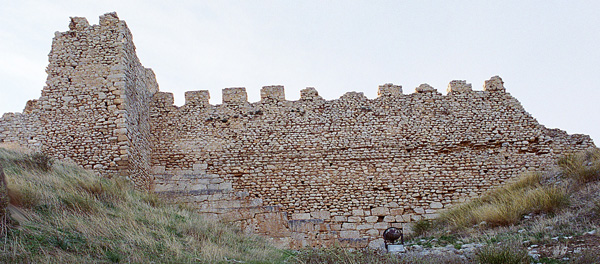
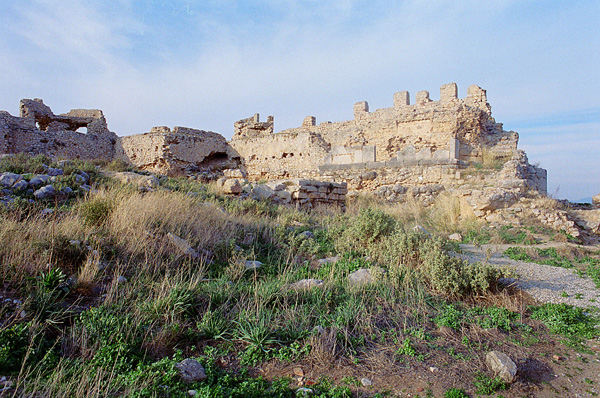
The fortified hill of Deiras sits slightly before the fortified hill of Argos proper, known since antiquity as Larissa - a reference to the seagulls which no doubt frequented the spot. We walked around the sanctuaries of Athena and Apollo, slightly underwhelmed by what we were looking at, in the same way that a visitor to Sparta may be disappointed.

Layers at Deiras

Still there was opportunity to do a bit of archaeo-sleuthing and mental reconstruction and all the other mindgames which offer themselves at sites having more than one building phases or periods of usage. We then drove the circuit of the Aspis hill, stopping at some of the polygonal masonry bastions and remarking at the large number of used prophylactics littering the one lane, but asphalted ring road, before setting off up the windy road to the summit of the hill.


Polygonal masonry on Aspis Hill

The asphalt road takes the visitor right up to what must be the old main entrance, facing sort of south and a little west and commanding a view over the modern town of Argos right through to Palamidi to the south, and beyond. The books mention that three different building phases are clearly visible and we were determined to tell them all apart, although we were upset that there would be no Mycenaean fortification to look at in addition to all the others.


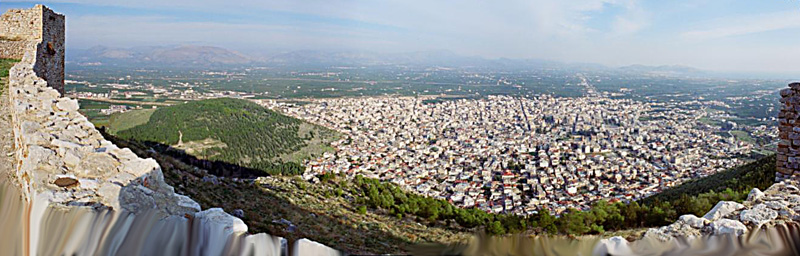
The view to Nafplio

We took in the view, which stretches easily out to the Palamidi to the south and on down the curving coast towards the lowlands of Arcadian Parnon and then entered the castle by what looks like it ought to be the main entrance after a small diversion playing with plants. Not any old plants - but some plant the name of which I must look up in a proper book because google is not returning anything useful. They have a bulbous head about 7-15 cm above the ground hiding the seeds. If you touch it ever so slightly, it will burst, showering the area with seeds. Very good fun for city kids like yours truly and K.


We took what seemed to be the most logical route around the castle - anticlockwise at ground level then walking back to enter the "keep" and after thoroughly exploring the keep, exiting from the ramp to the south.


Spolion in Northernmost bastion

There was a nice spolion in the northernmost bastion which I recorded on the video. Spolia are pieces of older masonry re-used as building blocks with no regard for their original purpose or position - all that is of interest is that it is a sometimes ready squared piece of building block. It is often the case that spolia incorporate carved members and inscriptions. It is on the walls of the citadel / keep that the many different periods of construction are visible - in this stretch of wall there are clearly visible ashlar, polygonal and medieval masonry courses.

To the left of the stretch of wall in the image is an improper entrance into the citadel which has some spray paint graffiti creating a rather bad image for the visitor. Talking of bad images for the visitor, the flag is in a very badly ripped state.

Entering the citadel from here (flagpole to your back and graffiti to your right), there is a walk around circuit which takes you to the opposite side and back to the car, while the rest of the citadel stretches out to your right. Do not go straight for the exit as you will miss most of the fun of having come up here.

Graffiti near the flagpole

Its is probably best to walk a little around towards the exit before turning round to face the entrance you have come in from. The upright wall with the window at the spot where you entered should now make sense architecturally. Maybe it won't, but for me it did. The window is the window in the apse of a medieval church, which runs parallel with the wall (with the ashlar and polygonal masonry described above) on the other side of it. The church is set at a level slightly higher than ground level and I am not sure from where access would have been originally. The church has a very simple plan (one aisle basilica with apse) and it was impossible for me to tell whether it was built by the defenders or the subsequent conquerors.

Looking back towards the church with cisterns in left foreground

We are currently standing about two thirds of the way to the other exit, OK - we did not go clamber about the church because I wrote that you should just look over your shoulder at it not go and clamber about. If you have clambered about, you may want to go back to where you were before going to clamber. It is not my fault you won't follow instructions.

With your back to the church, turn right and being careful of the cisterns, walk to the north encircling wall with the walkway that leads to the church again. Hang on - that means the church is set up N-S rather than E-W. The cisterns are fairly interesting in and of themselves. It is so easy to forget how important a reliable and clean supply of water is, no?

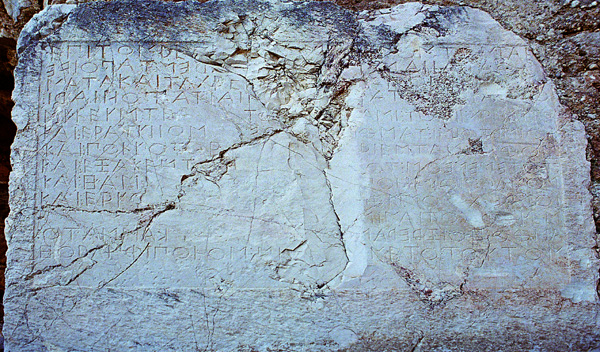
So we are now standing in the corner of the citadel, the church to our right in the distance and the cisterns behind us. We are facing northish and the walkway which goes right to the church is in front of us. There is a nice spolion column to our right, but the highlight of my visit to the citadel was this funky spolion incorporating an original archaic inscription. Absolutely mind blowing. The text does a bit of boustrophedon and has very archaic looking letters to my non specialist eye. It begins EPI TONDE and the top right corner is lost to canon or something. It incorporates the Ksi, Phi and Theta letters but as far as I can see no other late letters. I can't tell what it is about, although there is a few lines of text all beginning with KAI. There seem to be digammas in the script too and the deltas are rounded like roman Ds. I had a go at putting stuff into google but did not have as much success as the slab in the Bulgarian bar.

Archaic inscription slab

We left the citadel and came down into Argos joining the so-called ring road which takes you round the town on one way streets rather than through the central vegetable market when you are trying to get through Argos. You normally join this road by taking the right immediately before the very popular and rather good Pantazis fast food place. We went under the theatre etc. and headed out to Hellenikon to show K the pyramid and hopefully have all sorts of discussions about the loons who believe it to be older than it really is.

Here K outside the Castle of Larissa

We did not have the discussion which is a pity on the one hand as I was looking for K to confirm that what the consensus says is right, on the other hand, it was good. Why good? Well, we could not talk about it because K was totally unfamiliar with what it is the kooks say about the "pyramid". We just agreed that, yes it is pyramid shaped and left it at that.


K in front of the "pyramid" of Hellenikon


We spent the night at the rather nice Pension Marianna in Nafplio, which is on the castle and just underneath the Xenia hotel. Brilliant view and the rooms were not so bad as well.


K on top of the "pyramid" of Hellenikon - in a pose not unlike that of the French dwarf soldier from the 19th Century


Next time day 2 of the trip to the Argolid.